Among the many non-ship model kits that we carry at Ages of Sail is the line of horse-drawn carriage kits from Disar Model of Spain. These are 1:16 scale wood and metal model kits that are relatively quick and easy to build, and they include a street-scape base for a diorama-like display. Disar makes four of these kits in all, and they sell for around $60 each at Ages of Sail.


I will be building the Dog Cart for this build log series, chosen simply based on its looks.

A Look Inside the Box
The kit comes in a simple, standard cardboard box. The artwork and model kit details are printed on a color sheet that’s glued to the face of the box lid, and cover the top and bottom edges.

Interestingly, the box art shows all text in english on the face, but the bottom edge is printed in 5 languages. Presumably, this is an english language version of the box art.
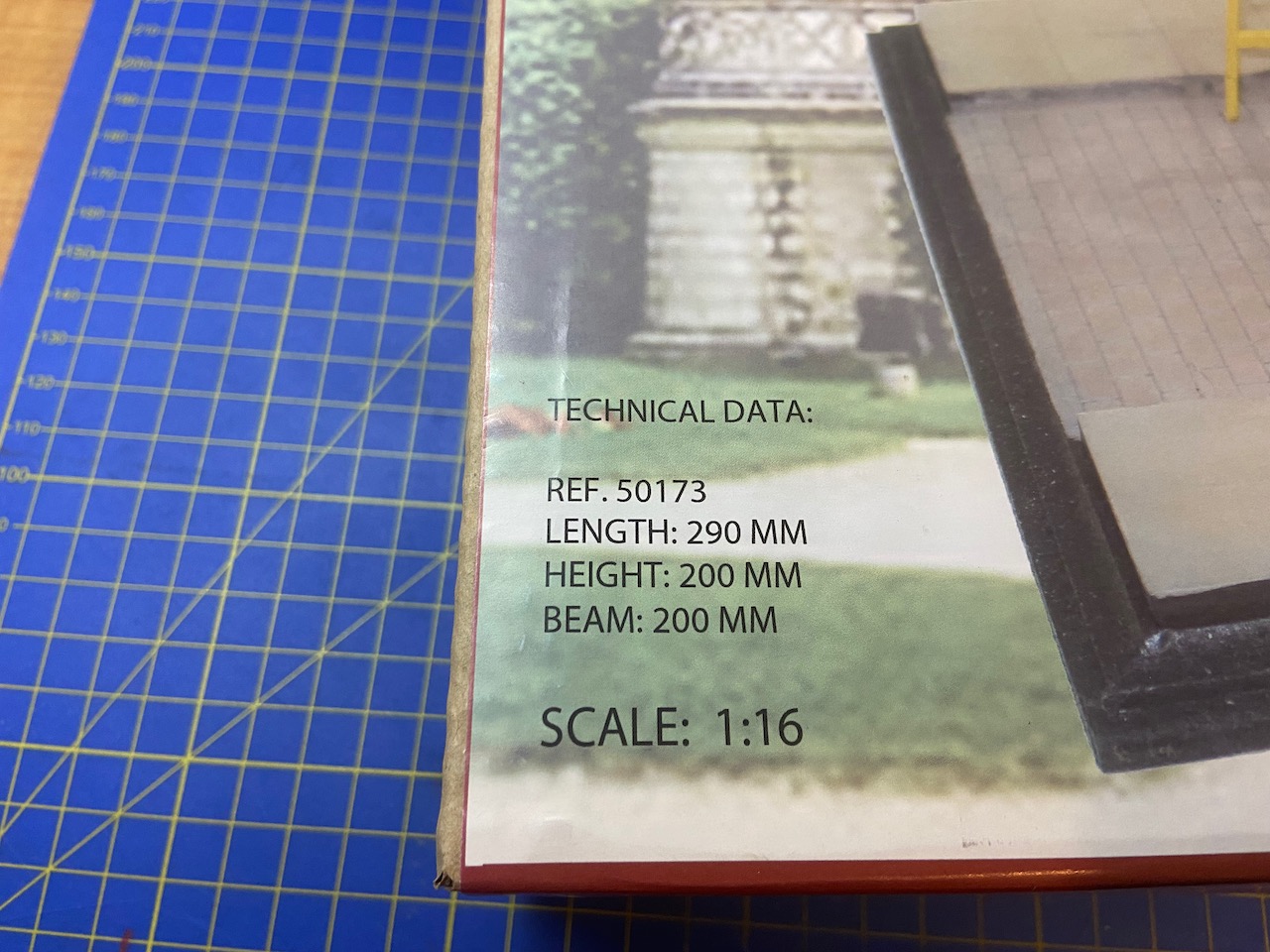
The length and beam dimensions given are actually for the base. The model is somewhat smaller, which should be clear from the box art, but the height is actually much shorter than stated.
The box seems somewhat larger than needed. There is a folded-over cardboard insert across the top that fills up much of the extra space, keeping parts from jostling around too much in the box.


Instruction Booklet
The instruction booklet is very thin, but is of nice quality, printed on glossy paper. Basically, it’s nothing more than 2 large format sheets, 12″ x 17″, stapled at the center and folded in half. Printed double-sided, it makes for an 8 page booklet, counting the covers.

There are really only three pages of instructions, one parts list, and two pages of diagrams. The text is in Spanish, English, and French. Judging from the box art, I expect there must be at least one other version of the instruction booklet that covers Italian and German. So, if you buy this kit from another seller, you want to make sure you get the right version.

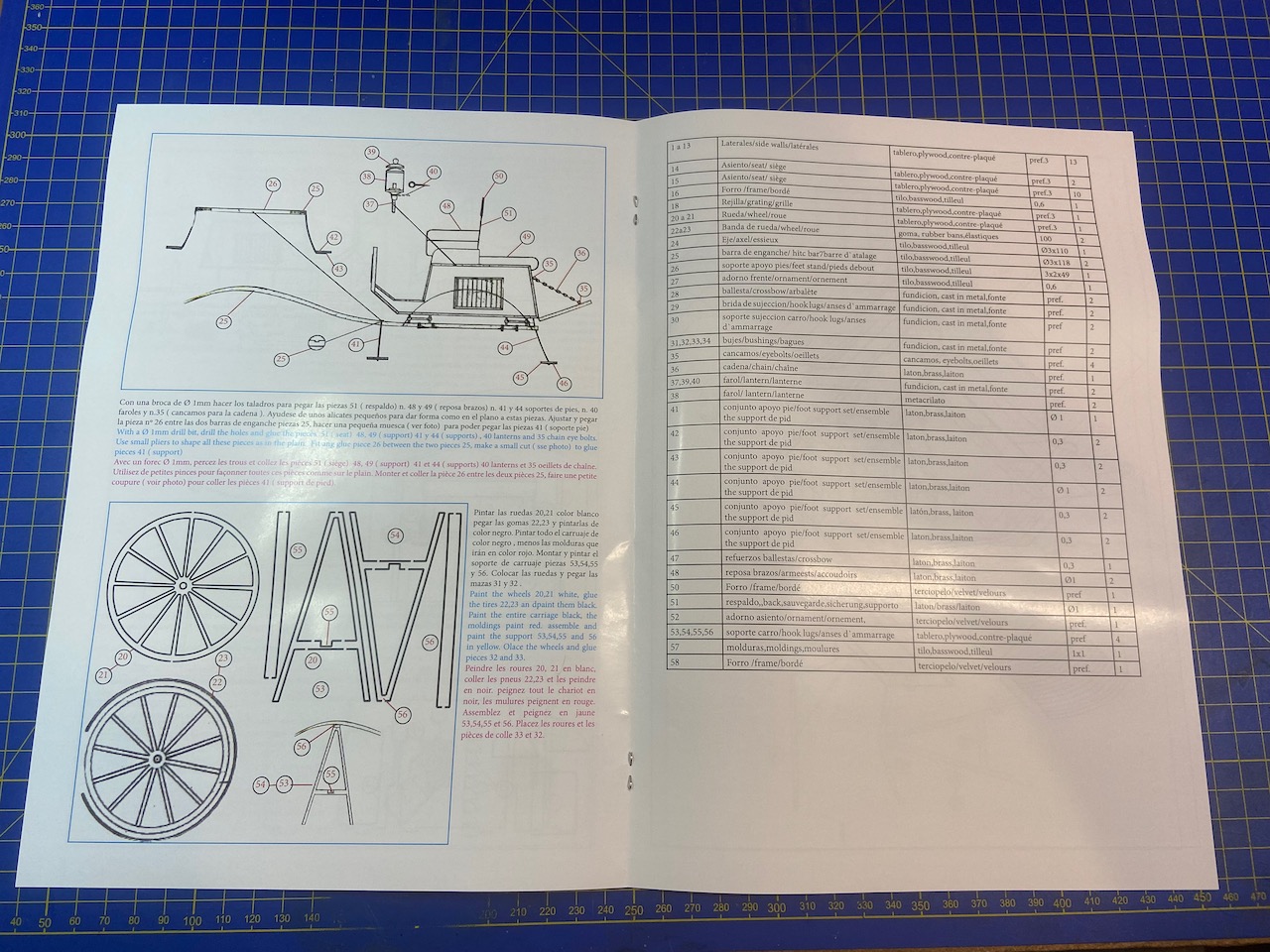

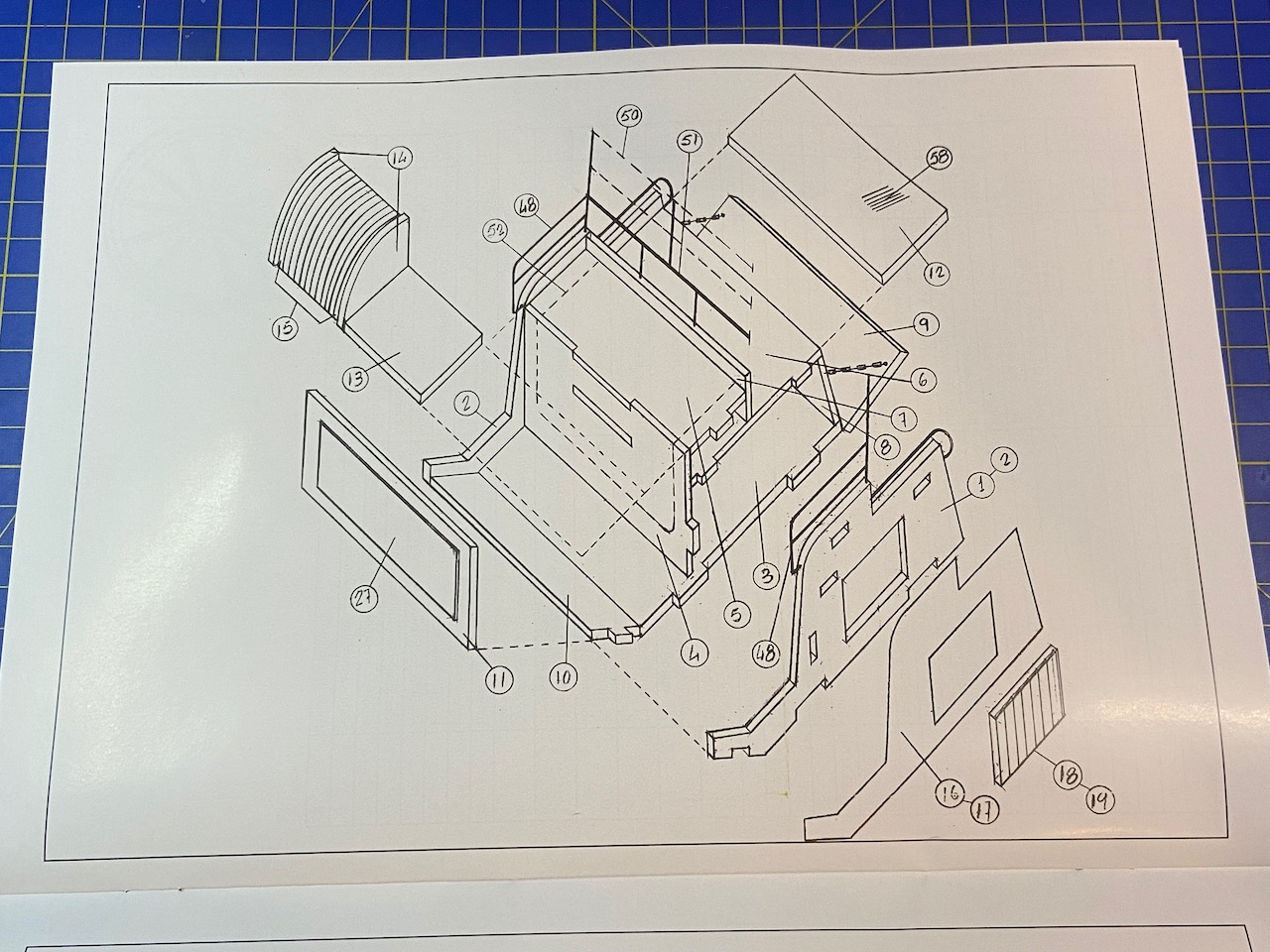


A cursory review of the instructions shows that the basic construction seems clear enough. However, I did notice that there is a wire railing that is not described in the instructions. It appears in the diagrams on the last pages of the booklet, and an experience modeler wouldn’t have any trouble fashioning the railing from wire, but it would be pretty challenging for a young, beginning model builder, and some adult supervision will probably be needed (The box indicates that this kit is for builders, aged 14 and up).
Kit Components
Aside from the instruction booklet, the first thing noticeable in the box is the parts box. Unlike with many or most kits, this is actually a usable, lockable, compartmented parts box, and not just a covered tray that spills parts left and right. When you’re done with this kit, you’ll have something usable left over to store things in.


This is a very sturdy parts box, and the locking tabs snap tightly, keeping the contents quite secure. The box is loaded with various loose parts, mostly castings, all nicely organized and separated.

Next in the kit are four sets of parts in plastic envelopes. The first, being what looks like a nice quality piece of velvet material. I expect this is for the seats upholstery.

The next two envelopes are sets of laser-cut sheets of plywood. These look to be of good quality, and many parts, probably the less obvious ones, are identified by numbers laser-etched next to the parts.


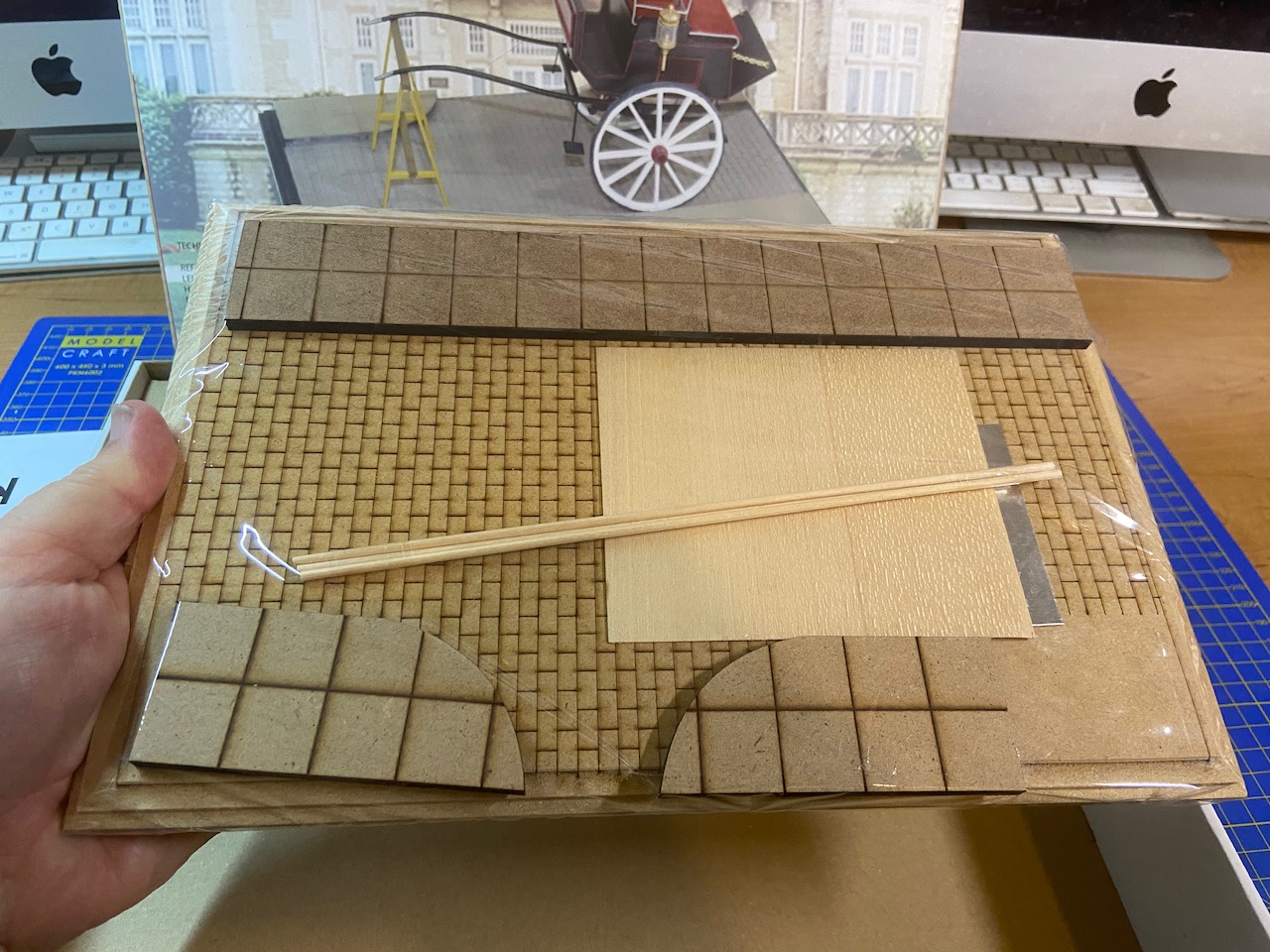
The last envelope contains the parts that mostly make up the display base. These are laser-cut and engraved medium density fiberboard (MDF), though the main base has a nicely routed edge. There are some other incidental materials in this package, including a couple basswood dowels, this sheet, and a small piece of thin sheet metal.
Here’s another look at all the individual parts sheets.


Now, I’m off to study the instructions to consider the build order, painting, etc.
 Ages of Sail